📌 Хедлайнс:
- Escalation in US-Iran Conflict: Military Strikes, Regional Retaliation, and Threat to Civil Aviation
- Nepal Flash Floods Crisis: Soaring Death Toll, Demands for Climate Compensation, and Humanitarian Aid Scrutiny
- Germany Blames Russia for Hybrid Attacks, Expels Diplomats, and Opens Terrorism Probes
- Japan Accelerates AI and Unmanned Defense Integration Amid Regional Security Pressures
- EU Trade Enforcers Press Beijing on 'Untenable' Surging Surpluses and Export Imbalances
- Trump Administration Moves to Terminate EEOC Demographic Data Collection amid Broader DEI Rollbacks
Escalation in US-Iran Conflict: Military Strikes, Regional Retaliation, and Threat to Civil Aviation

The conflict between the United States and Iran escalated sharply following a series of deadly mutual strikes across the Middle East. According to France 24, US military operations on Iranian territory resulted in 11 deaths across separate attacks, notably including a strike that hit a home hosting a wedding in Sirik county, Hormozgan province, killing civilians, including children. The Al Jazeera and The Guardian live coverages noted that the Iranian Red Crescent formally wrote to the International Criminal Court (ICC) to investigate the incident as a potential war crime.
In response to the US bombing campaign, Iran's Islamic Revolutionary Guard Corps (IRGC) launched retaliatory missile and drone strikes against American assets and allies in Kuwait, Bahrain, Jordan, and Erbil in Iraqi Kurdistan. US Central Command (CENTCOM) defended the initial actions, stating that the strikes targeted rocket launchers and aimed to prevent maritime threats in the Strait of Hormuz. US President Donald Trump issued a stern warning on Truth Social, declaring: "If the failed Nation of Iran retaliates for this very justified attack, they will be hit again at a much harder and higher level." Meanwhile, Ukrainian President Volodymyr Zelensky warned airlines that Russian airspace "is becoming unsafe" due to anticipated drone operations, prompting reactions from Russian authorities, with Transport Minister Andrey Nikitin stating, "Of course, we’re preparing for this and taking all these threats into account" as reported by Meduza.
Accents Media
While France 24 emphasized the broader macroeconomic impacts—noting that the flare-up sent oil prices surging and stock markets falling—Al Jazeera focused heavily on the humanitarian toll and ground-level documentation of munitions, such as potential AGM-84K SLAM-ER remnants identified by experts. Concurrently, regional players like Israel remain on high alert; Israeli Defense Minister Israel Katz stated that the IDF is prepared to respond "with great force" if dragged into the direct line of Iranian fire.
Nepal Flash Floods Crisis: Soaring Death Toll, Demands for Climate Compensation, and Humanitarian Aid Scrutiny

The humanitarian crisis in Nepal following catastrophic flash floods and glacier melting has deepened, with the death toll surpassing 1,000 to 1,100 people and thousands remaining missing, as reported by CNN and the Times of India. Amid rescue operations involving trapped tunnel workers and desperate families searching for missing relatives, the Nepalese government has launched a major diplomatic push demanding climate-related compensation from major greenhouse gas emitters.
Nepalese Foreign Minister Shisir Khanal explicitly stated in an interview that the Himalayan nation contributes "virtually negligible" emissions but suffers disproportionately. "This is not a matter of charity; it is a matter of legal and moral liability," Khanal asserted, targeting the world's top emitters—China, the United States, and India—for historical responsibility regarding glacier melt and extreme weather. Meanwhile, international aid efforts faced severe criticism. As highlighted by The Guardian, humanitarian experts condemned the initial US response of $500,000 (later raised to $3.6 million) as "pitiful" and "embarrassing," directly linking the sluggish and meager allocation to the dismantling of USAID under Donald Trump's administration. Mark Ward, a former USAID disaster response chief, noted that under the previous framework, comprehensive assessments and substantial aid would have been deployed immediately.
Accents Media
While CNN focused on ground-level human tragedy—such as school bus drivers narrowly escaping disaster and young survivors recounting the loss of dozens of family members—The Times of India emphasized the geopolitical shift in Kathmandu's foreign policy from seeking traditional foreign aid to demanding legally binding climate reparations. Concurrently, neighboring countries like India and China have stepped in with regional transit and medical assistance, though local communities continue to face acute drinking water and infrastructure deficits.
Germany Blames Russia for Hybrid Attacks, Expels Diplomats, and Opens Terrorism Probes
The German government formally held Russia "responsible" for a series of hybrid operations and sabotage acts on critical infrastructure, most notably an attempted drone attack laden with explosives targeting a Ukrainian cargo aircraft at Leipzig/Halle Airport in early August, according to DW.
Interior Minister Alexander Dobrindt and Foreign Minister Johann Wadephul announced sweeping countermeasures during a joint press conference in Berlin. Dobrindt stated that investigators found explosives and detonation systems matching known Russian hybrid warfare patterns. In response to what officials labeled "state-sponsored terrorism," Berlin ordered the closure of the Russian consulate general in Bonn by September 18, terminated the lease for the "Russian House" cultural center in Berlin, and tightened entry controls for Russian nationals. Furthermore, German authorities opened a terrorism investigation into separate sabotage acts involving homemade projectiles that disrupted extra-high-voltage power lines near the Jänschwalde coal-fired power plant in Brandenburg and caused short circuits in Bergheim, near Cologne. NATO Secretary General Mark Rutte and European Commission President Ursula von der Leyen expressed full solidarity with Berlin, vowing stricter EU sanctions targeting over 1,600 individuals linked to Russia's military-industrial complex.
Accents Media
Russian President Vladimir Putin swiftly rejected the accusations, claiming during a summit in Kyrgyzstan that Berlin was attempting to deflect from domestic political dissatisfaction and asserting that the evidence had been "planted." European security analysts view the coordinated German response as a watershed moment in countering persistent Russian hybrid aggression across EU logistics and energy grids.
Japan Accelerates AI and Unmanned Defense Integration Amid Regional Security Pressures

Japanese Prime Minister Sanae Takaichi told senior members of the Self-Defense Forces (SDF) that Japan must urgently accelerate the integration of artificial intelligence (AI) and unmanned defense assets, ahead of a year-end revision of three key national security documents, as reported by Japan Today.
Addressing the SDF Senior Commanders' Conference in Tokyo, Takaichi emphasized that traditional equipment development paces are insufficient against complex regional security challenges posed by China and North Korea. "It goes without saying that we should introduce even more speedily technologies that develop at a completely different pace," Takaichi stated. The push follows the Defense Ministry's submission of a record budget request totaling 8.89 trillion yen ($55 billion) for fiscal 2027, earmarked for low-cost attack drones and AI-driven command structures. The policy adjustments also respond to ongoing pressure from the US administration regarding burden-sharing and defense spending expansion toward the 2 percent GDP target established in previous security framework overhauls.
Accents Media
While defense hawks welcomed the modernization drive as essential for a robust democratic posture against regional adversaries, domestic critics and opposition voices raised concerns over escalating regional arms races and potential security dilemmas. Concurrently, Japan is deepening security coordination through joint air drills with France and managing economic headwinds from rising bond yields and currency fluctuations.
EU Trade Enforcers Press Beijing on 'Untenable' Surging Surpluses and Export Imbalances
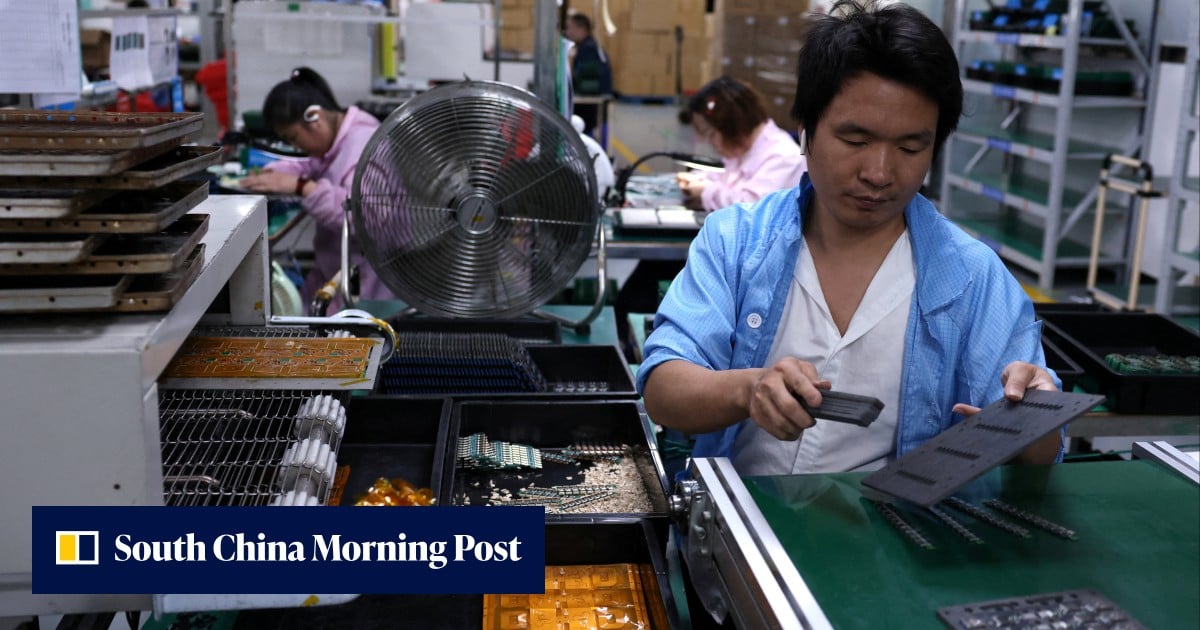
A high-level delegation of European Union trade enforcers descended on Beijing to press Chinese officials on what Brussels termed "untenable" trade imbalances and surging export volumes into the bloc, according to the South China Morning Post.
Spearheaded by Denis Redonnet, the EU's top trade enforcement officer, the delegation held intense closed-door talks aimed at securing structural commitments from Beijing before an impending October deadline set by the European Commission. EU trade official Ditte Juul Jorgensen warned the European Parliament that rising concentration dependencies in strategic sectors pose direct systemic risks to the bloc's economic security. In July alone, China widened its trade surplus across nearly all EU member states. Jorgensen noted that while Beijing has engaged in dialogue, the underlying economic challenges remain "very, very significant," raising the specter of a damaging tit-for-tat trade war if concrete concessions are not agreed upon.
Accents Media
Economic analysts note that these friction points are exacerbated by broader geopolitical tensions, including US-led tariff pressures and shifting supply chain routes. Concurrently, Chinese carriers have reported scaling back thousands of flights to destinations like Japan due to strained diplomatic relations, redirecting aviation capacity toward Southeast Asian markets.
Trump Administration Moves to Terminate EEOC Demographic Data Collection amid Broader DEI Rollbacks

The US Equal Employment Opportunity Commission (EEOC) has proposed terminating its decades-old EEO-1 reports, which mandate companies to submit demographic workforce data broken down by race, ethnicity, sex, and job title, as reported by The Guardian.
For six decades, EEO-1 data served as the foundational tool for federal investigators and civil rights advocates to identify systemic workplace discrimination in hiring and promotions. Legal experts and former commissioners warned that eliminating this data collection marks a fundamental shift that will weaken civil rights enforcement. The proposal aligns with the second Trump administration's aggressive campaign against diversity, equity, and inclusion (DEI) initiatives. Trump-appointed EEOC Commissioner Andrea Lucas defended the move, claiming that demographic data collection is burdensome on employers and incentivizes discrimination against white workers. Critics point out that under its rewritten strategic goals, the EEOC has prioritized discrimination claims from white men, dropped active cases involving transgender workers, and scrutinized corporate DEI practices.
Accents Media
Civil rights organizations, including the National Women's Law Center and the ACLU, have criticized the administration's actions as an effort to weaponize civil rights enforcement. Researchers from academic centers reported that the EEOC abruptly terminated all data-sharing agreements with social scientists, further shielding federal employment trends from independent public oversight.

Дотримуйтесь етичних норм спілкування